
The data industry is plagued by "Tool Fatigue." People interested in data are overwhelmed by the sheer number of tools, aspiring engineers burn valuable time learning syntax for platforms that have no market density in their target sector, and some juniors are out there acquiring certifications like Pokemon cards. Today I’m outlining the Gambill Data Career Framework: a reverse-engineering approach to skill acquisition that prioritizes Market ROI over tool loyalty.
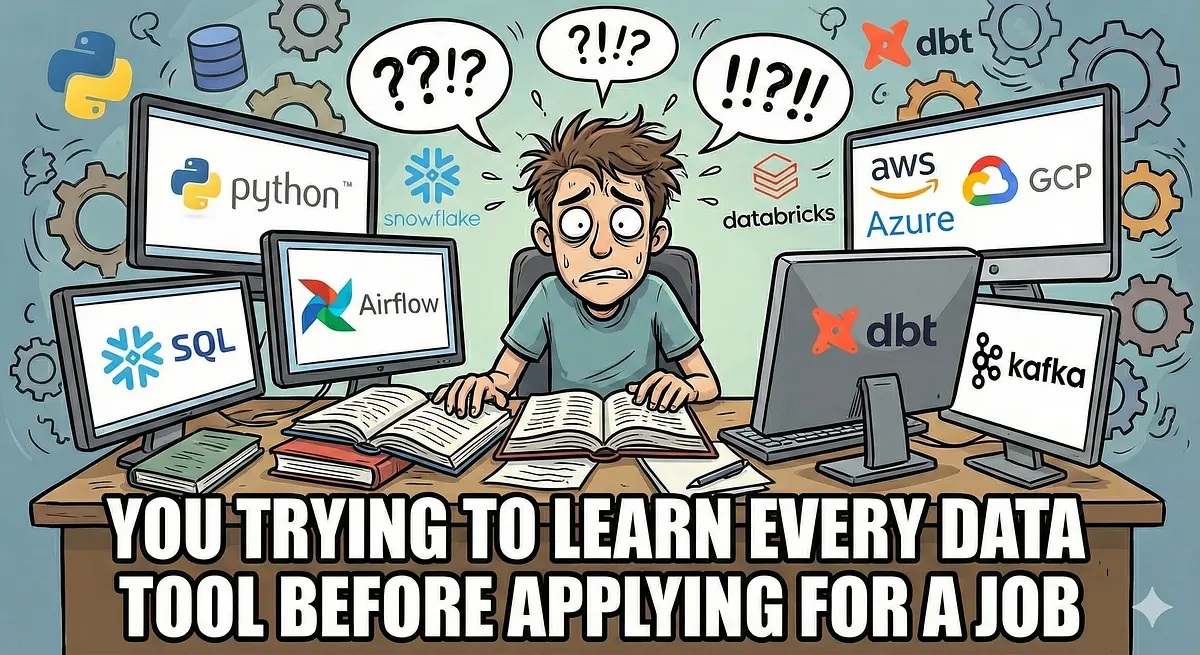
The “Tool-First” Trap
I see the same mistake in my coaching clients, my Discord community, and junior consultants pitching for work. They start with the supply, not the demand.
They say: “I have a GCP certification, and I learned PySpark, Airflow, and Snowflake. Who will hire me?” Without first asking: “I want to work in FinTech. What patterns are they using, and which tools and skills best facilitate that?”
If you follow us on YouTube (The Data Engineering Channel), you know we are unabashed proponents of Databricks. We believe the Lakehouse architecture meets the growing needs of enterprise data where they are at. However, if you are targeting a legacy healthcare system that runs entirely on SQL Server and SSIS, my preference for Databricks is irrelevant to your employability.
You need to stop treating your skills like Pokemon cards and start treating them like business assets. Here is the framework I use to guide senior talent.
Phase 1: The Market Audit (Requirements Gathering)
Do not open a code editor until you have defined the problem.
Identify the “Ideal” State: Find 10 job postings that you actually want. Not just the salary, the actual work and type of business.
Extract the Schema: Ignore the HR fluff. Look for the technical stack.
Orchestration: Is it Airflow? ADF? Databricks Workflows?
Compute: Spark? Snowpark? T-SQL?
Storage: Delta Lake? Iceberg? S3? On-prem SQL?
The Venn Diagram: Input these descriptions into an LLM with a specific prompt: “Identify the overlapping technical skills across these 10 roles. Ignore soft skills.”
If 8 out of 10 roles require Azure Data Factory and Databricks, and you are spending your nights learning GCP BigQuery, you are wasting your time, and will not land interviews.
Phase 2: The “Ugly” Project (Implementation)
Most portfolio projects are “Happy Path” engineering.
The data is clean (Titanic dataset).
The latency is irrelevant.
The governance is non-existent.
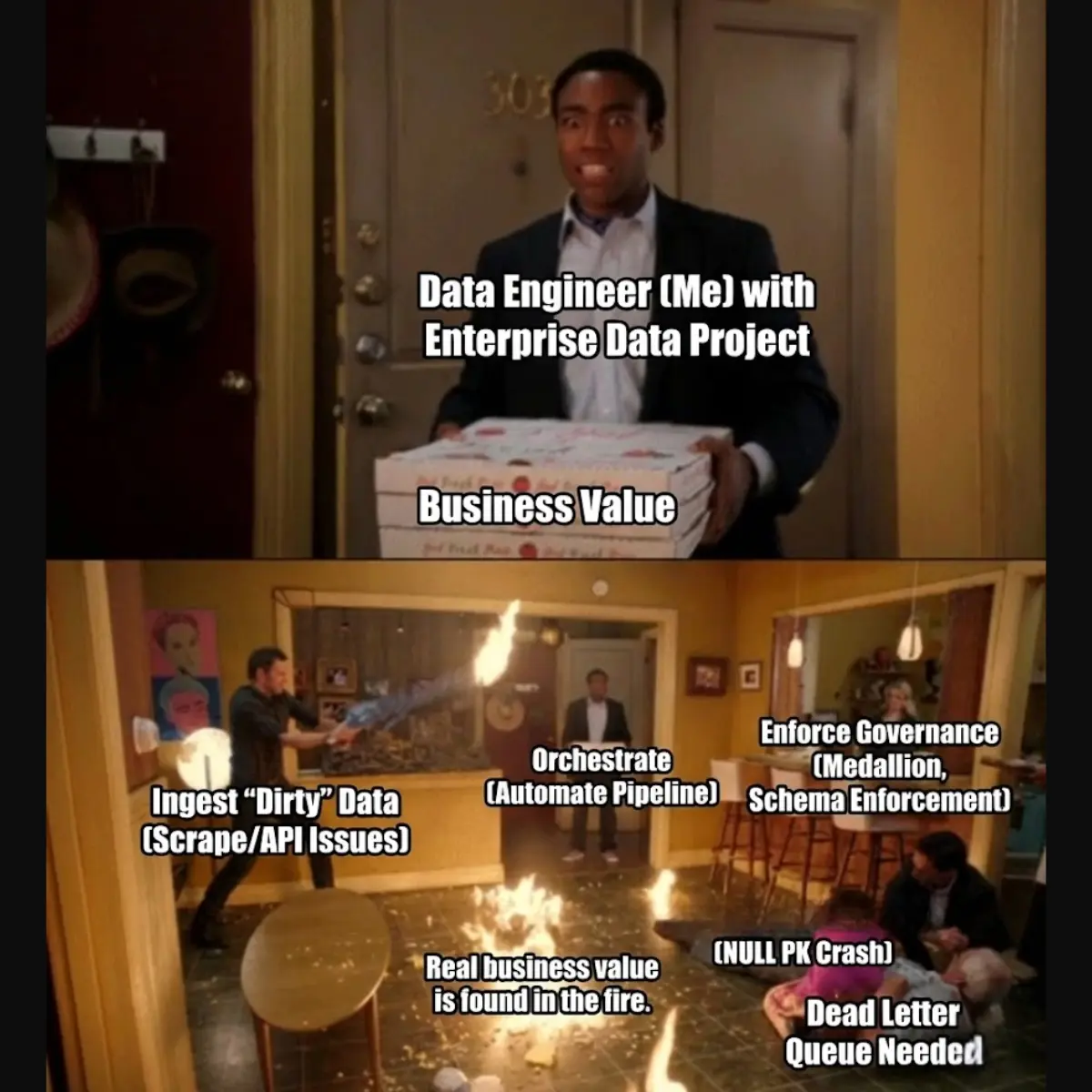
Real business value is found in the fire.
To impress a Principal Architect, your project must mimic enterprise reality.
Ingest “Dirty” Data: Scrape a website where the schema changes, or use an API that rate-limits you.
Enforce Governance: Don’t just dump data into a table. Build a Medallion Architecture (Bronze/Silver/Gold). Implement schema enforcement. If a bad record arrives, where does it go? (Hint: It needs a Dead Letter Queue).
Orchestrate: Automate the pipeline. If I have to run a notebook manually to see your code work, the project is a failure.
The Gambill Standard: If you can’t handle a NULL value in a primary key column without the pipeline crashing, you aren’t ready for production.
Phase 3: The Architecture Decision Record (Documentation)
This is the differentiator. This is how you move from “Coder” to “Trusted Engineer.”
Do not just push code to GitHub. Write a README that explains the WHY.
Why did you choose Delta Lake over Parquet?
Why did you use a dedicated cluster instead of a serverless one?
Why did you model the data in a Star Schema?
Why did you choose SCD 1 instead of SCD 2?
I hire engineers who can defend their architectural decisions. I do not hire engineers who copy-paste from Chat GPT or Claude without understanding the implications.
The Verdict
The tool does not matter. The capability matters.
Right now, the market creates high demand for engineers who can manage the Databricks/Azure ecosystem. That is where the ROI is highest. But if the market shifts tomorrow, the engineers who followed this framework will shift with it. The ones who merely memorized syntax will be left behind.
Stop guessing. Audit the market. Build the solution.
About the Author
Chris Gambill
I am a Senior Data Strategy and Engineering Leader with over 25 years of experience building systems that handle billions of dollars and petabytes of data. I have survived outages, divestitures, budget cuts, and platform migrations.
I am here to share the brutal truth, Data Platform PTSD, and lessons that bootcamps won’t show you.
Gambill Data operates on three core pillars:
Code to Cash: If your code doesn’t solve a business problem or save money, it doesn’t have a reason for existence.
Anti-Fragility: The goal is not to avoid errors; it is to build systems, generate revenue, and excel in careers that survive them.
Strategy > Syntax: Anyone can write code. Few can architect for production.
If you are ready to stop thinking like a Junior Engineer and start thinking like a Strategic Partner, you are in the right place.
Join me in the trenches:
YouTube: The Data Engineering Channel – Weekly video breakdowns of production horrors and architectural reviews.
LinkedIn: (Chris Gambill & Gambill Data) Insights on navigating the data job market without the fluff.