
Let me know if this sounds familiar: You’ve hired a team of highly capable, expensive data engineers. You’ve invested heavily in modern platforms like Databricks or Snowflake. Leadership expects this investment to power advanced analytics, predictive modeling, and maybe even a new LLM initiative.
And yet, the data team is widely viewed as a bottleneck, and shadow reporting is taking hold.
Stakeholders don’t fully trust the dashboards because the numbers “looked weird” last Tuesday. Your data team says “Yes” to every request, your engineers are buried under a mountain of ad-hoc Jira tickets, and your roadmap is consistently behind target. Instead of driving business strategy and building scalable architecture, your highly paid talent is stuck running a “Jira Factory”… endlessly closing tickets, pulling manual reports, and fighting fires caused by upstream pipeline breaks.
If this is your reality, you are not alone. And more importantly, it is costing your business a staggering amount of money.
Throughout my career building systems in high-stakes, low-margin-for-error industries like telecom, aviation, and cybersecurity, I’ve learned a hard truth: Great code does not fix a broken organizational structure. If you want your data team to be a profit center, you have to mature your operations. You cannot automate chaos. Here is the blueprint for getting your data organization out of the weeds and into the driver’s seat.
The True Cost of the “Jira Factory”
Before we talk about the solution, we have to quantify the bleeding.
A recent survey by Wakefield Research found that data engineers spend 40% of their time, two full days per week, firefighting data quality issues. That means nearly half of your payroll for data engineering is going toward chasing down bad data instead of building new, revenue-generating infrastructure.
It gets worse. The same survey revealed that 74% of data quality issues are first surfaced by business stakeholders. Think about what that does to trust. If the VP of Sales is the one telling the data team that the revenue dashboard is broken, the data team has already lost credibility. They are operating in a purely reactive state.
The financial impact of this immaturity is massive. Gartner estimates that poor data quality costs organizations an average of $12.9 million every single year in wasted resources, delayed initiatives, and lost opportunities.
To stop the bleeding and transform your data team into a strategic partner, you must implement four core pillars of operational maturity.
Pillar 1: Enforce Data Contracts and SLAs
You cannot build a reliable analytics or AI strategy on top of fragile pipelines. The vast majority of pipeline failures aren’t caused by bad data engineering; they are caused by upstream teams changing a schema or dropping a column without warning.
In software engineering, teams use APIs to ensure that two systems communicate reliably. If an API contract is broken, the code doesn’t deploy. Data engineering, historically, hasn’t had this luxury. Data is often just dumped into a database or a lakehouse, and data engineers are left to make sense of whatever arrives.
The solution is establishing rigorous Data Contracts and clear Service Level Agreements (SLAs).
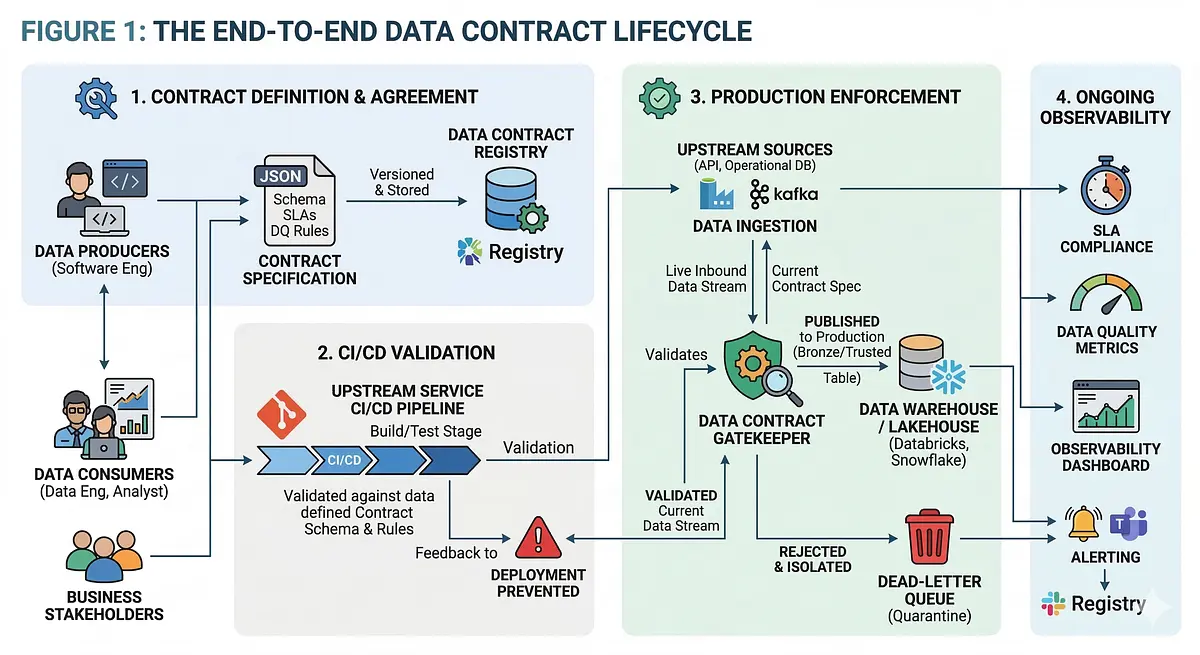
A Data Contract is a formal, code-enforced agreement between the software/platform engineers producing the data and the data engineers consuming it. It defines the exact schema, expected data types, and quality thresholds of the data before it ever enters your pipeline.
By implementing contracts, you shift the responsibility of data quality upstream. If a software update breaks the data contract, the CI/CD pipeline stops the deployment until it is fixed. This forces alignment between software and data teams, transforming implicit assumptions into explicit guarantees. Stale data is better than bad data!
Pillar 2: Taming Schema Drift and Building Anti-Fragility
Schema drift, defined as the unexpected, unannounced changes to the structure of incoming data, is the silent killer of data pipelines. It is the primary reason your engineers are waking up to failed dbt runs or broken Databricks jobs.
Schema drift is inevitable in a modern, agile business. But chaos is a choice.
A mature data organization doesn’t just react to broken pipelines; it designs systems that are “anti-fragile.” As coined by Nassim Nicholas Taleb, anti-fragile systems don’t just withstand shocks; they improve from them. In data engineering, this means building infrastructure that anticipates failure.
How do you do this?
Automated Schema Validation: Catch unexpected columns or changed data types at the ingestion layer, shunting bad records to a dead-letter queue rather than letting them corrupt the gold tables.
Robust CI/CD for Data: Treat your data pipelines like production software. No code reaches production without automated testing, peer review, and staging environments.
Data Observability: Implement monitoring tools that alert the data team to anomalies before the dashboard updates, ensuring the data team is always the first to know about a problem.
Alerting and Refresh Timestamps: Create robust alerting mechanisms when pipelines fall past a specified threshold to make sure your data team is the first to know. Create stale / last refresh alerts in reports and data sources so that business stakeholders know data is stale, and when to expect a ETA. Communication is the cornerstone of trust!
When you plan for failure, you stop being a victim of it.
Pillar 3: Build Realistic, Value-Driven Roadmaps
Jira factories are born from a lack of strategic vision. When a data organization doesn’t have a clear roadmap tied directly to overarching business KPIs, they default to simply taking orders. They become an IT help desk for data pulls.
Maturing your org means learning to say “no” to low-impact, ad-hoc requests and saying “yes” to architectural investments that scale.
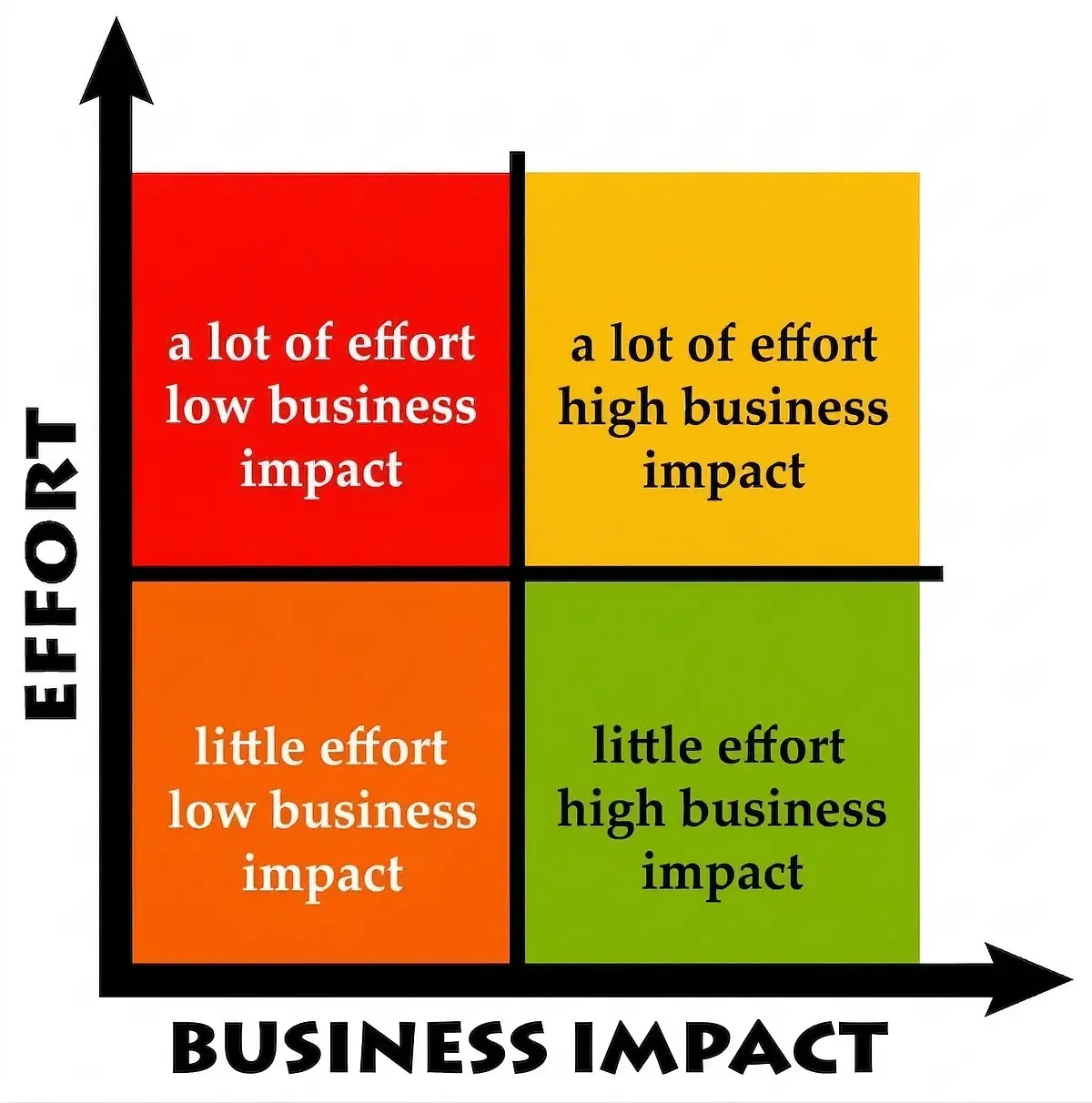
This requires setting realistic timelines that account for technical debt reduction, not just feature delivery. According to a Total Economic Impact study by Forrester Consulting, organizations that move away from manual, reactive processes toward automated, mature data pipelines see a 194% return on investment (ROI). Furthermore, they experienced a 60% decrease in data rework time and a 30% increase in developer productivity.
When your team isn’t spending two days a week fixing broken pipelines, they can finally build the foundational architecture required for advanced use cases like predictive churn modeling or LLM-driven internal tools.
Pillar 4: Bridge the Trust Gap with the Business
At the end of the day, data engineering is a customer service function, and your customers are the business stakeholders. If they don’t trust the numbers, your Databricks cluster is just an expensive paperweight.
Moving from a cost center to a revenue generator requires active education and relationship building. It means:
Sitting down with business leaders to explain why Data Contracts matter to their bottom line.
Demonstrating how reliable data accelerates their departmental goals.
Positioning the data team as strategic advisors who suggest solutions, rather than just order-takers who write SQL.
Transparency builds trust. When you publish your SLAs, admit when a pipeline is delayed, and proactively communicate data quality metrics to the business, you change the narrative. You stop being the team that “always breaks the dashboard” and become the team that “safeguards the company’s most valuable asset.”
The Bottom Line
Preparing your business for the age of AI requires a foundation of absolute stability. You cannot build cutting-edge machine learning models on top of a fragile, undocumented, and constantly breaking data lake.
The transition from a Jira Factory to a strategic revenue generator doesn’t happen by hiring more engineers or buying more expensive software. It happens by implementing structure, enforcing standards, and treating data engineering with the same operational rigor as traditional software engineering.
If your team is stuck in the weeds, it’s time to change the blueprint.
Are you ready to mature your data organization and position your team for profitability? Let’s build a roadmap that actually works.
📅 [Book a 15-Minute Strategy Intro with Chris Gambill] to discuss how we can implement Data Contracts, tame schema drift, and get your team out of the Jira Factory.